

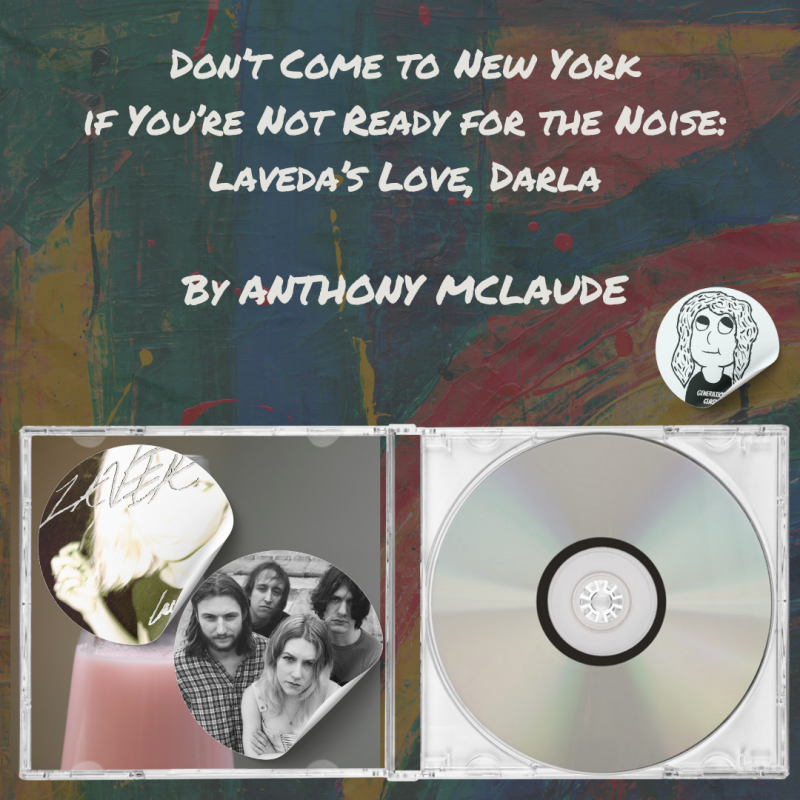
“I don’t wanna blame a cellphone/I don’t wanna keep beating myself up.” You can almost smell the rain on concrete when Laveda’s Love, Darla kicks in. It’s the sound of a city that never really shuts its eyes after midnight, neon lights flickering, trains groaning in the distance, and that hollow feeling of being too online for your own good.
The Albany-based duo, Ali Genevich and Jake Brooks, don’t just play alt-rock; they live inside it like a half-remembered dream of the internet age. Their sophomore, 90's-inflected album is similarly like walking through TV static; they seem to discover feelings amidst the distortion. Each and every note sounds like it is a dying streetlight, and each and every lyric sounds as though it has been typed, wiped and typed hundreds of times before being sung.
“Cellphone” might be the record’s thesis statement. “I don’t wanna blame a cellphone anymore,” Genevich admits, not angry, just quietly bone-tired. It’s not about the tech; it’s about the way it numbs us in every way of connection that feels artificial.. And yet, through Laveda’s reverb-drenched guitars, that numbness somehow feels beautiful.
“I Wish” digs deeper into that vulnerability. “I wish I could be different,” Genevich sings, her voice breaking just enough to make the line hurt. It is the type of lyric that feels small at first, but carries on for hours after. The song does not burst apart into disappointment; it rips to shred like the threads of a shredded, moth-eaten, grandma-knit cardigan, unspooling and coming apart, thread by thread, until all that is left is something painfully human.
“Bonehead” hits like a release. It’s messy, wild, and cathartic; The Breeders by way of a Queens practice space. When Genevich yells “I’m a bonehead,” it pulls your skeletons into the daylight like a confession that you’ve finally said out loud after too many nights holding it in. It is full of noise and silence with a “march in place” quality; it’s exactly the song that makes you want to yell along until you don’t feel so alone.
Then there’s the distinct, dark, and whimsical “Tim Burton’s Tower,” a gradual ascent into crooked, candlelit dread. The song feels possessed, echoing guitars foul like fog, and Genevich’s voice bleary and intimate, somewhere between Kurt’s sigh and Courtney’s ache. “I’m looking up at the tower,” she sings, and you can picture it like a mic jagged, grunge riff pricking at your ears: that looming shape on the horizon, impossible to ignore and impossible to reach.
By the time “Lullaby” closes the album, you already know Love, Darla isn’t about finding peace, it’s about learning to breathe in the chaos. “I’ll sing you a lullaby, but you can’t fall asleep,” Genevich confesses. It’s the sound of exhaustion turned into art, of trying to rest while the city never does.
Grunge has always been about truth, ugly, imperfect, and alive, even when it feels dead . Laveda understands that. They don’t chase shattered nostalgia; they build something new from its cracked and weathered bones. Love, Darla doesn’t try to fix the disconnection. It just lets you feel it in the echo of subway tunnels at 2 a.m.; tired but unbroken, a pulse that refuses to fade.
Add comment
Comments